Product Insights
How to Choose a Ceramic Tableware Manufacturer in China
A practical checklist for evaluating ceramic tableware factories, product capability, customization, quality control and export coordination.
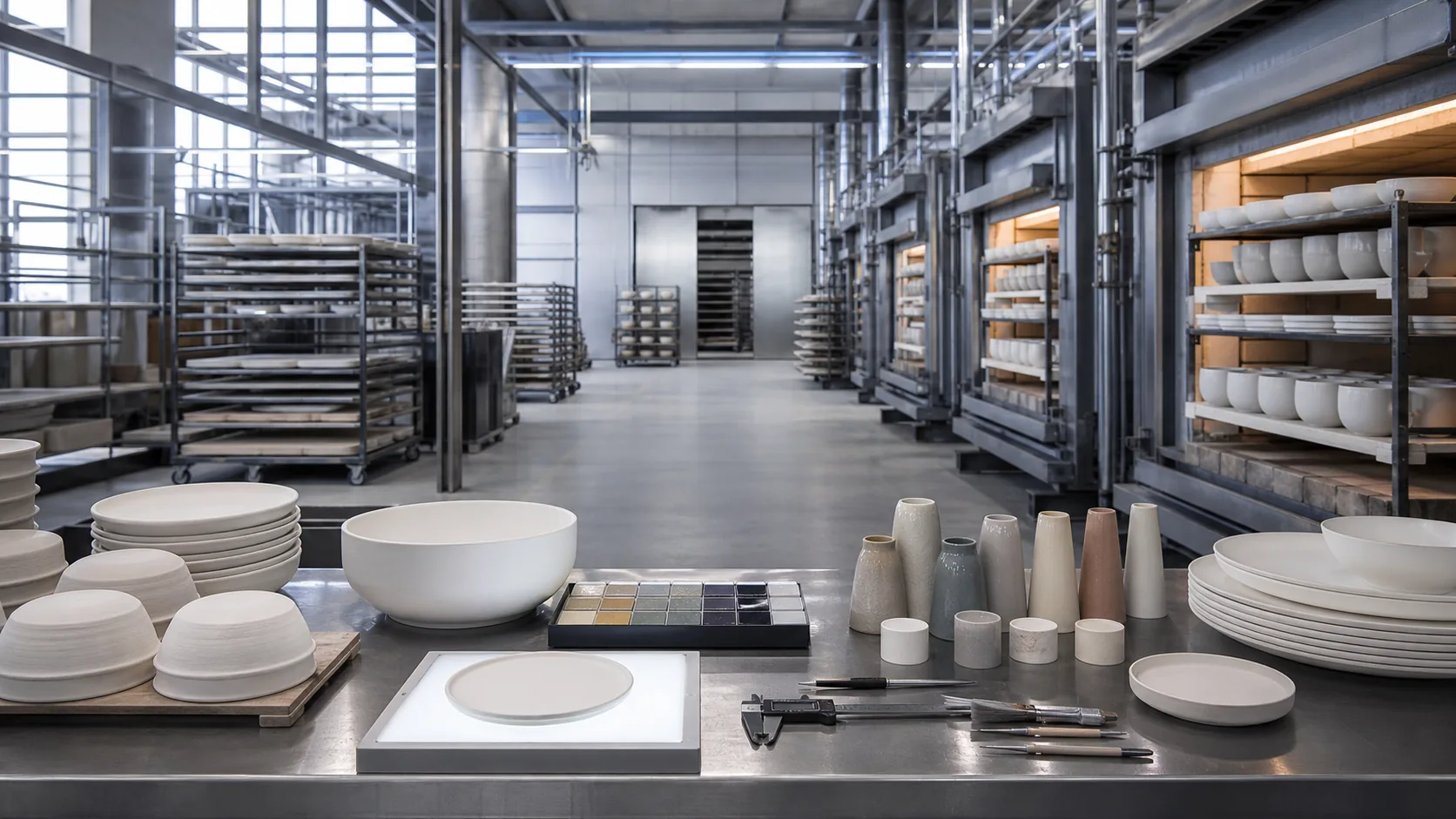
Choosing a ceramic tableware manufacturer in China should start with a clear understanding of your product, sales channel and quality expectations. A good supplier is not only a factory with kilns. For B2B buyers, the right partner should help translate a brief into samples, approved specifications, stable production, protective packaging and export-ready delivery.
1. Match the manufacturer to your product category
Different ceramic suppliers have different strengths. Some are better suited for mugs and drinkware, while others focus on dinnerware sets, serveware, hospitality tableware, candle jars or home decor ceramics. Before comparing prices, confirm whether the supplier has experience with the exact product type you need.
2. Confirm material and finish capability
Buyers should ask whether the supplier can support porcelain, stoneware and the finish direction required by the project. Matte glaze, glossy glaze, speckled surfaces, reactive glaze and solid colors can each behave differently in production. Physical samples and color range approval are important before bulk orders.
3. Understand the customization route
Custom ceramic tableware can follow several routes: existing form with logo, adapted form with custom glaze, private label packaging, decal decoration, pad print or new mold development. The right route depends on order quantity, timeline, target price and how much product ownership the buyer needs.
4. Evaluate MOQ and sampling logic
MOQ is affected by shape, mold, glaze, decoration, packaging, production schedule and order mix. If a buyer is testing a new market, existing forms or simpler decoration routes may be more practical. For long-term brand ranges, more customized development can make sense when repeat orders are expected.
5. Review quality control and inspection support
A reliable ceramic supplier should be able to explain how samples are approved, how production files are controlled, what defects are checked, and whether third-party inspection can be supported. Important checks include glaze consistency, dimensions, logo position, surface defects, packing method and carton marks.
6. Check export packaging and communication
Ceramic tableware needs packaging that protects the product and supports the buyer's sales channel. Retail boxes, gift packs, hospitality bulk packs, barcode labels and export cartons should be discussed early. Buyers should also review how the supplier communicates sample status, production updates and shipment handoff.
What to include in your RFQ
- Product type, item list and target set composition
- Size, capacity, shape reference or drawing
- Material, glaze and color direction
- Logo, decal, artwork or packaging requirements
- Order quantity, target price and repeat order plan
- Destination market, compliance needs and delivery timeline
How CLAYPORT supports ceramic tableware buyers
CLAYPORT is a Liling, Hunan ceramic manufacturer and export supply partner established in 2008. The company supports ceramic tableware, mugs, plates, bowls, cups and saucers, candle jars, home decor ceramics, gifting products and private label programs. CLAYPORT has 300+ employees and daily output capacity of 70,000 pieces for different mug programs.
For a broader non-China checklist, read the main guide: How to Choose a Ceramic Tableware Manufacturer.
Buyers can send a product brief, quantity, finish reference, packaging needs and delivery target through the CLAYPORT contact page for review.