Product specialization
Confirm whether the manufacturer is strong in mugs, dinnerware, serveware, hospitality items, home decor ceramics, candle vessels or private label ranges.
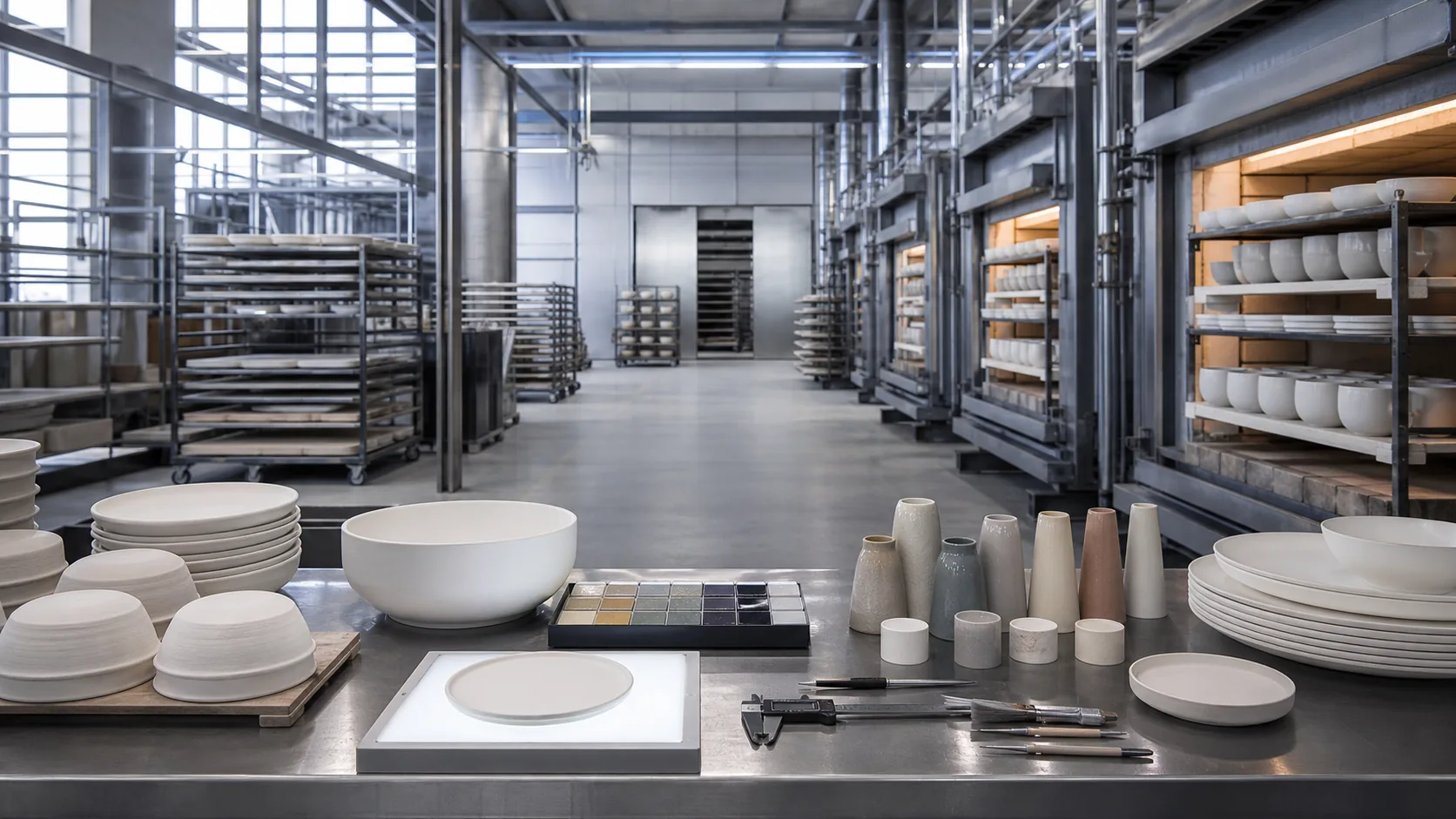
B2B buyer checklist
A practical evaluation framework for buyers planning mugs, plates, bowls, dinnerware sets, hospitality tableware and private label ceramic programs.
Selection framework
Choosing a ceramic tableware manufacturer is not only a price comparison. Buyers need to understand whether the supplier can translate a product brief into samples, approved specifications, stable production, protected packaging and export-ready delivery.
This checklist is written for retailers, hospitality groups, importers, distributors, e-commerce brands and private label teams comparing ceramic manufacturing partners.
Manufacturer checklist
Confirm whether the manufacturer is strong in mugs, dinnerware, serveware, hospitality items, home decor ceramics, candle vessels or private label ranges.
Ask how the supplier handles porcelain, stoneware, matte glaze, glossy glaze, speckled surfaces, reactive glaze and color range approval.
Compare existing forms, adapted forms, logo decoration, decal, pad print, packaging changes and new mold development before choosing a route.
Understand how MOQ changes by shape, mold, glaze, decoration, packaging, order mix, production schedule and repeat order plan.
Use physical samples to approve shape, weight, color, logo placement, surface tolerance, packaging and critical dimensions before production.
Check whether the supplier can support inline review, final inspection coordination, defect classification, packing checks and third-party inspection.
Review gift boxes, inner protection, carton marks, barcode labels, drop risk, container loading and retail or hospitality unpacking needs.
Confirm communication rhythm, documentation, shipment handoff, delivery timing and how production updates are shared during the order.
RFQ preparation
Before asking for a quotation, prepare enough product and commercial context for the manufacturer to recommend a realistic route.
Decision path
Best for faster launches, MOQ-aware programs, gift sets, logo mugs and test-market ranges.
Useful when buyers need a familiar product shape with custom glaze, logo, packaging or set logic.
Suitable for color-led collections, reactive glaze programs, private label visuals and seasonal products.
Appropriate for proprietary shapes, long-term retail ranges and brand-owned tableware systems.
Supplier evidence
Strong supplier pages usually show factory facts, product categories, development process, case examples, inspection approach and export workflow. These signals help buyers and search engines understand the supplier's role.
CLAYPORT was established in 2008 in Liling, Hunan, with 300+ employees and mug output capacity of 70,000 pieces per day.
A concise supplier reference for product scope, private label support, quality workflow and RFQ needs.
FAQ
Related buyer guides
Details buyers should prepare for faster quotation and sampling.
How sample rounds, glaze approval, packaging and inspection shape timing.
What moves minimum order quantity up or down in ceramic programs.
Supplier evaluation
CLAYPORT can help compare product form, material, finish, MOQ, packing and export timing before sampling.