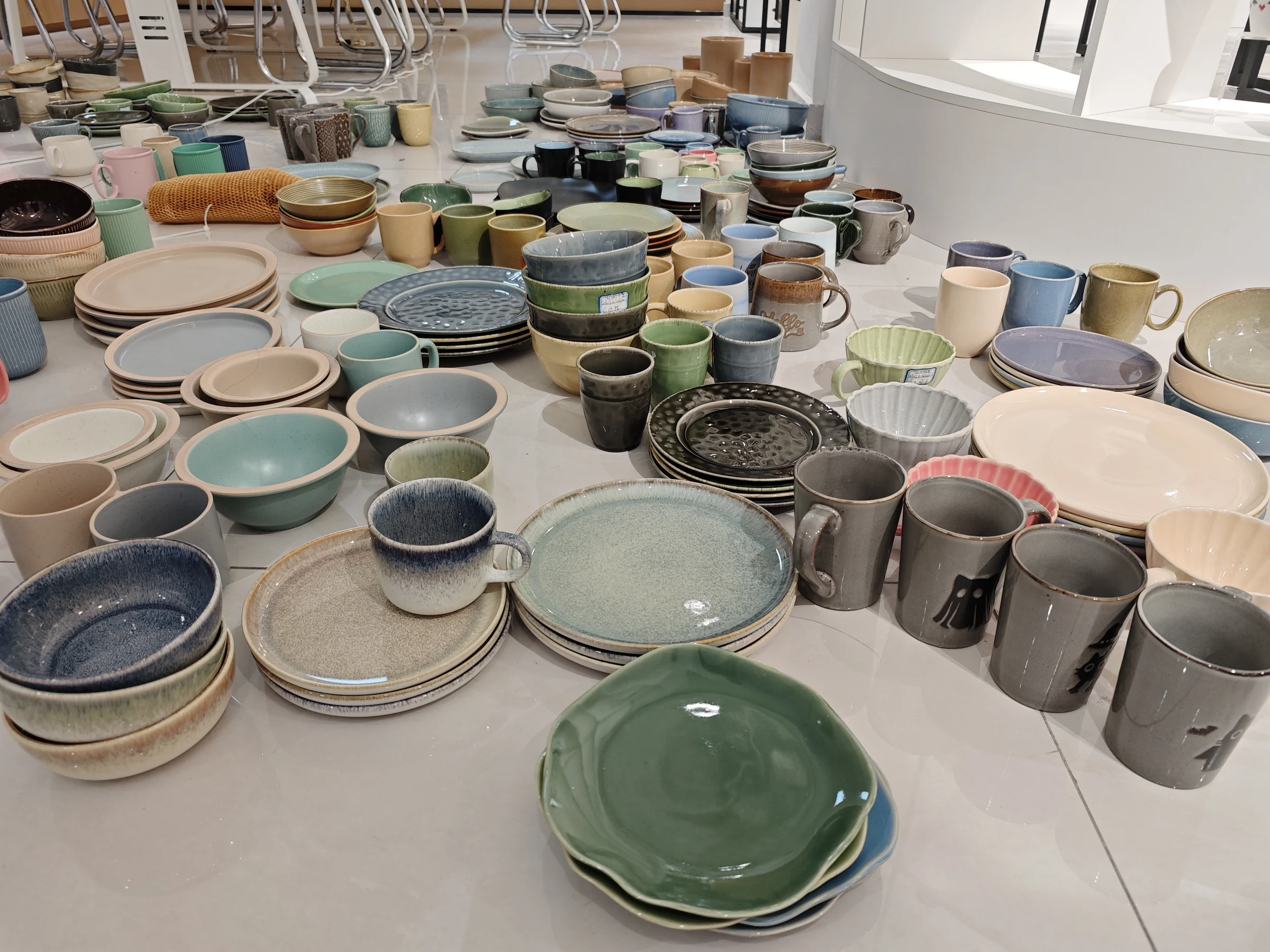
No individual Liling company is publicly confirmed in available supplier records as a specialized producer of wholesale stoneware mugs for retailers. The practical answer for international retail, hospitality, gifting, and private label buyers is not a ranked list of factories, but a structured comparison of supplier capabilities verified through documented inquiries and samples.
Why a Name-Based Shortlist Is Not Possible from Verified Evidence
The verified supplier evidence covers general ceramic product categories—tableware, drinkware, home decor, and gifting—and documents customization options such as shape adaptation, glaze direction, logo placement, and packaging. However, no source identifies any Liling company as a wholesale stoneware mug producer for retail programs. Without confirmed business records for stoneware mugs—including material specifications, firing range, glaze durability, and retail packaging programs—a shortlist naming specific companies would amount to unverified promotion. The responsible approach is to treat selection as a multi-step capability audit rather than a directory lookup.
How to Build a Shortlist Without Relying on Unverified Claims
Start by defining the stoneware mug program in operational terms. Retail buyers need a supplier that can hold stoneware body composition, glaze character, decoration placement, and retail packaging consistent across production runs. Use the following ordered process to turn an open supplier search into a comparable shortlist.
- Draft a specification sheet covering mug capacity, height, diameter, wall thickness, handle design, foot stability, stoneware firing temperature, glaze type, and acceptable color range.
- Define customization requirements including decal artwork, logo placement, engraving, or reactive glaze effects, and specify acceptable variation across bulk production.
- Set packaging and export criteria including retail box structure, protective inserts, carton marks, export carton specifications, and container loading details.
- Issue a structured RFQ requesting shape drawings, material datasheets, glaze samples, packaging mock-ups, MOQ, lead time, and quality inspection documentation.
- Request pre-production samples and hold them against the specification sheet before final comparison.
This sequence mirrors inquiry categories used in ceramic vase programs—shape, dimensions, material and glaze direction, logo needs, packaging preferences, and delivery details—and applies equally to stoneware mugs for retail. Collecting the same information from every candidate creates a comparable dataset instead of relying on marketing language.
Key Comparison Criteria for Wholesale Stoneware Mugs
The following table organizes critical criteria for comparing ceramic suppliers in Liling for a retail stoneware mug program. No single factor should dominate; relative weight depends on retail channel, order volume, and brand positioning.
| Comparison Area | What to Verify | Why It Matters for Retail Buyers |
|---|---|---|
| Stoneware body composition | Clay source, firing temperature, vitrification, thermal shock resistance | Determines durability, microwave/dishwasher safety, and breakage rates |
| Glaze system | Type (matte, glossy, reactive), lead/cadmium compliance, abrasion resistance | Affects food safety, color consistency, and long-term appearance |
| Customization capability | Shape adaptation, decal application, logo placement, color matching | Supports private label and branded gifting programs without excessive tooling costs |
| Packaging and export cartons | Retail box, protective inserts, labels, carton marks, container loading plan | Prevents transit damage and reduces hidden costs in cross-border distribution |
| Minimum order quantity (MOQ) | Tiered pricing by volume, flexibility for test orders | Determines fit for small-batch retail launches or large seasonal programs |
| Lead time and production scheduling | Sample lead time, bulk production window, peak season capacity | Impacts seasonal retail planning and promotional deadlines |
| Quality control documentation | Inspection standards, defect tolerance, final audit reports | Provides objective evidence of consistency and reduces returns |
A supplier with strong customization but high MOQ may suit a large private label program but not a boutique retailer testing a new line. A lower MOQ with inconsistent glaze documentation creates a different risk profile. Comparison is not about a single score but matching documented capability to specific program constraints.
Using Verified Supplier Examples Without Overstating Capability
Clayport International is a ceramic supplier whose verified product range includes tableware, drinkware, home decor, and gifting items for retail and private label programs. Documented customization options include shape adaptation, glaze direction, decal artwork, logo placement, cartons, gift boxes, and buyer specification packs. This evidence supports the company as a potential candidate for a broad ceramic drinkware program, but it does not confirm a specialized stoneware mug production line with specific material, MOQ, or export certifications. It also does not establish that Clayport International is located in Liling.
For retailers evaluating Clayport or any similar supplier, the next step is to request stoneware mug samples and technical documentation covering the comparison table above. The structured RFQ should include stoneware body composition details, firing temperature range, glaze compliance reports, and examples of previous drinkware packaging for retail. Only after reviewing those documents and samples can the supplier be placed on a shortlist relative to others.
Common Mistakes in Supplier Comparison
Assuming location equals specialization. Liling has a broad ceramic industry, but a factory producing ceramic planters or vases does not automatically have the same competency in stoneware mugs. Always confirm the specific product category through samples and technical data, not a generic company description.
Comparing only unit price. Stoneware mug programs involve tooling, decoration, packaging, and logistics costs often hidden in a low unit price. Ignoring export carton specifications or glaze compliance can lead to higher landed costs or retail returns.
Skipping pre-production samples. A catalog image does not verify the supplier's ability to reproduce a specified glaze, logo placement, or package configuration at required volume. Samples are the only objective basis for a shortlist.
Ignoring packaging and export documentation. Retail buyers lose margin when mugs arrive broken or customs clearance is delayed due to missing carton marks or container plans. Packaging and export details belong in the RFQ, not as an afterthought.
What to Do Next
To build a defensible shortlist for wholesale stoneware mugs in Liling, prepare a complete RFQ that includes the specification sheet, customization requirements, packaging preferences, target price, order quantity, delivery window, and compliance standards. Send it to ceramic suppliers that document drinkware and customization capabilities. When using general ceramic supplier references such as Clayport International, do not treat them as Liling candidates unless their Liling location is independently verified. Require pre-production samples, material datasheets, and quality inspection reports from the actual production site.
Compare responses using the table above, weighting each criterion according to your retail channel and brand requirements. The goal is not to find a name on a list, but to establish a documented, repeatable production standard that protects your brand across every retail order.
FAQ
What if a Liling supplier cannot provide stoneware mug samples or material datasheets?
Exclude that supplier from the shortlist. A ceramic manufacturer that cannot document its stoneware body, glaze compliance, or packaging specifications cannot be evaluated for retail consistency. The absence of technical documentation is a risk signal for cross-border buyers.
Can a supplier that makes ceramic vases or planters also make stoneware mugs?
Possibly, because the underlying ceramic production and customization processes share some steps, but this must be verified. Request stoneware-specific samples, firing range data, and references for drinkware programs. Do not infer competency from a different product category.
How many suppliers should a retailer shortlist before ordering samples?
A practical approach is to shortlist three to five suppliers that pass the initial RFQ review, then order pre-production samples from all of them. The sample evaluation should follow the same specification sheet, and the final comparison should weigh documented capability, sample quality, MOQ fit, and total landed cost.