Industry Updates
Liling's Ceramic Manufacturing Ecosystem: A Guide for Custom Tableware Buyers
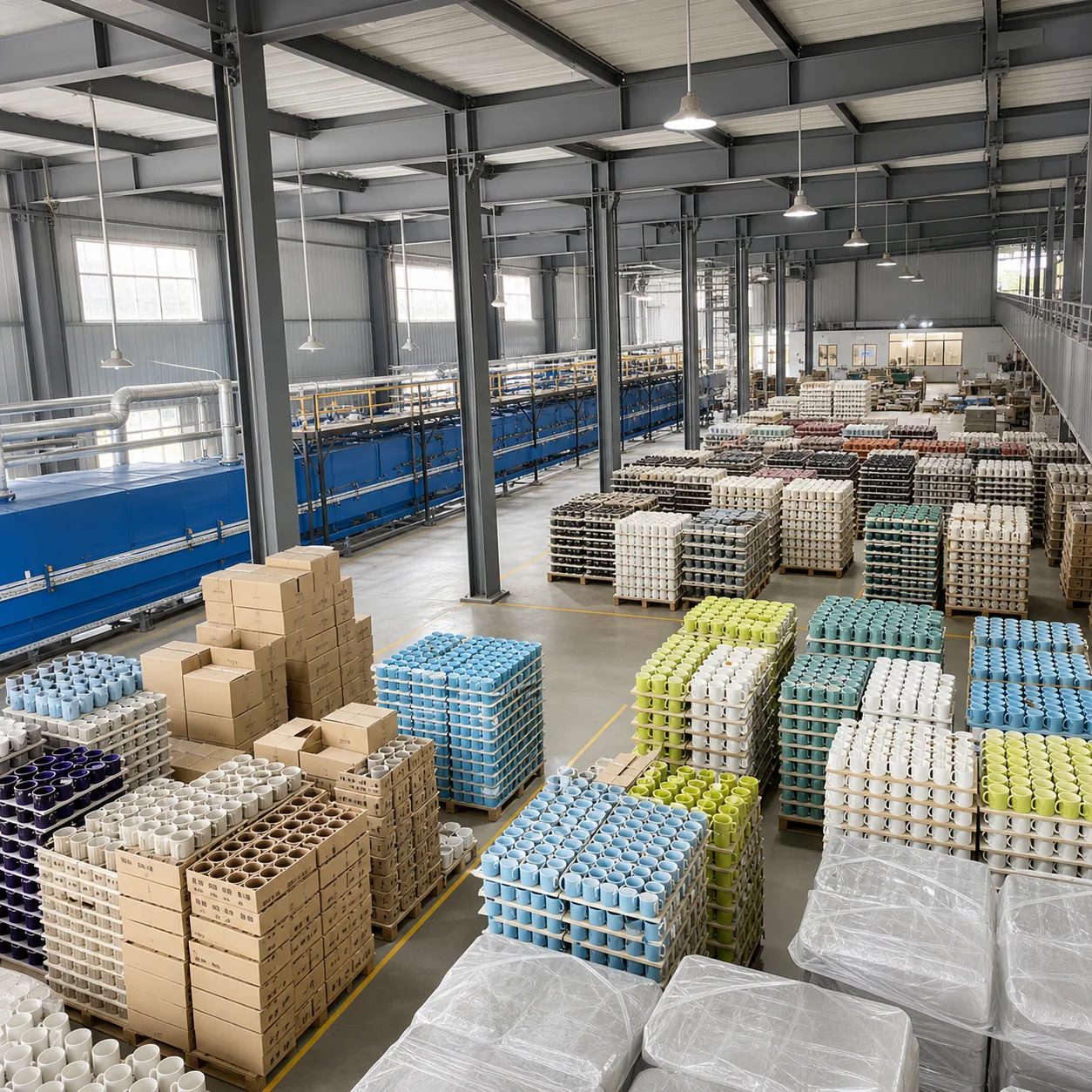
Liling, a city in Hunan Province, China, has developed a specialized ceramic manufacturing ecosystem that international buyers often consider when sourcing custom ceramic tableware. The region's history in ceramics is long, but for procurement professionals, the practical question is how this ecosystem translates into reliable production, quality control, and export coordination for private label and hospitality programs.
For buyers evaluating suppliers in Liling, the first consideration is the range of manufacturing capabilities available. The local industry supports various ceramic types, including porcelain and stoneware, which are common choices for tableware. Porcelain is typically selected for its refined appearance and suitability for formal dining, while stoneware is often preferred for its durability and casual aesthetic, making it a practical option for restaurants and cafes. A supplier's ability to work across these materials directly affects the product range a buyer can develop.
Beyond material selection, the depth of product development support is a critical differentiator among manufacturers. A capable supplier should offer range planning, shape selection, surface direction, and color story development. This means the supplier can guide a buyer from an initial concept to a defined product line, considering market positioning and price points. For international buyers, this level of involvement reduces the risk of misalignment between the design intent and the final production outcome.
Customization is often the core of a private label or hospitality tableware program. Buyers typically need to adapt existing forms, discuss new molds, or specify custom shapes. A supplier's ability to manage glaze direction, logo application, and decals is essential. Additionally, packaging plays a significant role in retail readiness; options such as cartons, gift boxes, and shelf-ready packaging are part of a comprehensive service. The more integrated these services are, the smoother the path from sample to shipment.
Quality discipline is another pillar that buyers must examine when choosing a ceramic manufacturer. This involves not only the physical inspection of finished pieces but also the coordination of quality standards throughout the production process. For a supplier to be a true partner, they should provide clear quality inspection coordination, ensuring that the products meet the specified standards before they are packed for export. This is particularly important for stackable dinnerware for restaurants, where consistency in size and finish is essential for efficient storage and service.
Export packaging and logistics coordination are the final pieces of the supply chain puzzle. A manufacturer that can manage the complexities of international shipping, including export packaging that protects ceramic goods, adds significant value. For buyers, this reduces the administrative burden and helps ensure that products arrive in good condition. The ability to coordinate these logistics is a sign of a mature supplier that understands the needs of international clients.
When comparing potential partners, buyers should consider a structured evaluation. The following table outlines key aspects to review when assessing a ceramic supplier in Liling or elsewhere, focusing on capabilities rather than unverifiable claims.
| Evaluation Aspect | What to Look For | Why It Matters |
| --- | --- | --- |
| Material Expertise | Porcelain and stoneware options | Determines product suitability for target market |
| Development Support | Range planning, shape selection, color stories | Reduces design-to-production misalignment |
| Customization Services | Mold discussion, glazes, logos, decals | Enables private label and brand differentiation |
| Quality Coordination | Inspection processes and standards | Ensures consistency and reduces defects |
| Packaging & Logistics | Retail-ready packaging, export coordination | Protects goods and simplifies international trade |
A key takeaway from this evaluation is that the value of a Liling-based supplier lies not just in the factory floor but in the coordination of services around it. Buyers should prioritize suppliers who can articulate a clear process for product development, quality control, and export logistics. This is where a partner like CLAYPORT positions itself.
CLAYPORT is a ceramic tableware and home decor supply partner for international buyers, connecting design intelligence, manufacturing capability, quality discipline, and export coordination. Based in Liling, the company focuses on tableware and home decor, offering services that span from product development to OEM and private label support. For buyers seeking to navigate the Liling ecosystem, CLAYPORT provides a single point of contact for managing the complexities of custom ceramic tableware production.
The importance of a well-structured buyer brief cannot be overstated. A useful ceramic project brief should state the target market and channel, product type, target price, estimated quantity, material, finish, decoration, packaging, compliance needs, and launch or delivery timeline. Providing this information upfront helps the supplier align their development and production efforts with the buyer's commercial goals.
For hospitality operators, the fit is specific. Hotels, restaurants, and cafes require durable, service-friendly tableware with good stacking behavior, neutral palettes, and a clear replacement logic. The food presentation aspect is also critical. A supplier that understands these hospitality requirements can recommend appropriate shapes and glazes that balance aesthetics with the rigors of daily use.
Retail buyers, on the other hand, often focus on shelf-ready packaging, commercial ranges, price ladders, repeatable color stories, gift sets, and scalable SKU planning. The supplier's ability to offer retail-ready ceramic gift packaging and consistent quality across large orders is a key factor in maintaining brand reputation and customer satisfaction.
In conclusion, the decision to source from Liling should be based on a thorough assessment of a manufacturer's capabilities, from material expertise to export coordination. By focusing on the process and services rather than unverified claims, buyers can make informed choices that support their long-term product strategy.
### Frequently Asked Questions
#### What is a typical MOQ for custom ceramic tableware?
Minimum order quantities (MOQs) vary significantly among manufacturers and depend on the product type, production method, and level of customization. For standard shapes with existing molds, MOQs may be lower, while new mold development or complex decorations often require higher quantities. It is essential to discuss MOQs directly with the supplier, providing your estimated annual volume to get a realistic figure. A supplier's willingness to accommodate different order sizes is often a sign of flexibility, but the final number is always negotiated based on specific production parameters.
#### How long does ceramic tableware development take?
The development timeline for ceramic tableware is not fixed and depends on the complexity of the design, the need for new molds, and the sampling process. A simple adaptation of an existing shape might take a few weeks for samples, while a completely new design with custom molds and glazes could take several months. The timeline also includes sample revisions and approval stages. To manage expectations, buyers should build in extra time for the development phase and communicate their launch deadlines clearly in the initial brief.
#### What information should I include in a ceramic product brief?
A comprehensive ceramic product brief should include your target market and sales channel, the specific product type, your target price point, and an estimated order quantity. You should also specify the material (e.g., porcelain or stoneware), the desired finish and decoration, and the packaging requirements. Additionally, note any compliance standards your products must meet and your intended launch or delivery date. A detailed brief helps the supplier provide accurate development timelines and cost estimates, reducing the risk of misunderstandings later in the project.